Last updated: December 16th, 2025
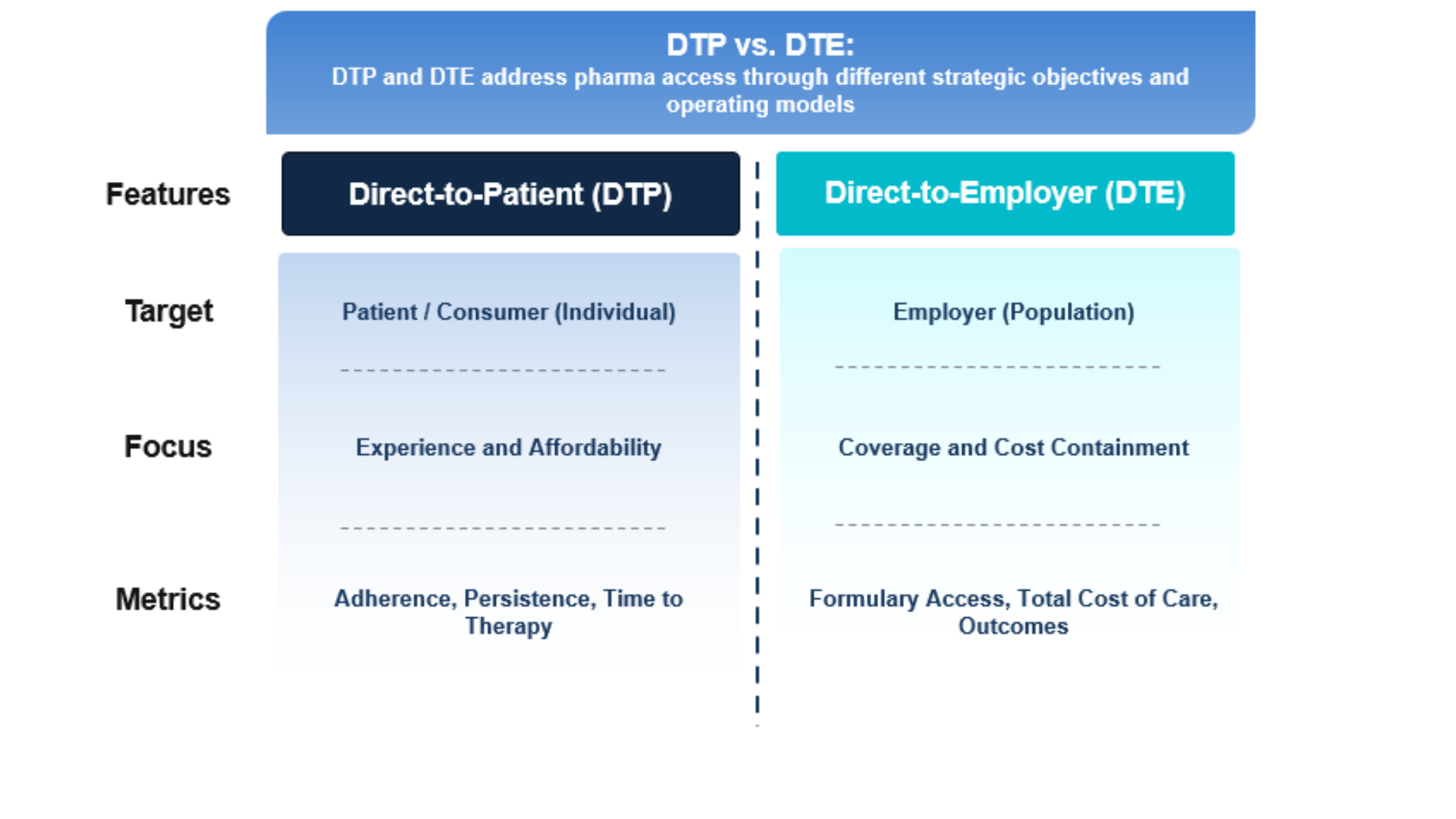
Direct-to-Patient (DTP) and Direct-to-Employer (DTE) represent the two primary vectors of disruption in pharma access, each defined by a distinct strategic objective and operating model.
DTP is designed to improve the individual patient experience and affordability, while DTE is oriented toward population health management and employer-driven coverage economics.
Why Are Manufacturers Moving to These Direct Models?
For decades, pharmaceutical manufacturers have depended on a complex network of intermediaries, including wholesalers, pharmacy benefit managers (PBMs), payers, and pharmacies, to deliver medicines to patients. Over the last decade, PBMs have consolidated to the point that three organizations control approximately 80% of U.S. dispensed prescriptions¹. This results in the extraction of increasing rebates from manufacturers while limiting patient access and contributing to a fragmented, often frustrating patient experience.
Today, policy pressure, economic constraints, rising patient expectations, and digital health advances are now accelerating a shift toward Direct-to-Patient (DTP) and Direct-to-Employer (DTE) distribution models.
The Forces Driving the Shift to Direct-to-Patient and Direct-to-Employer
Policy and Pricing Pressures
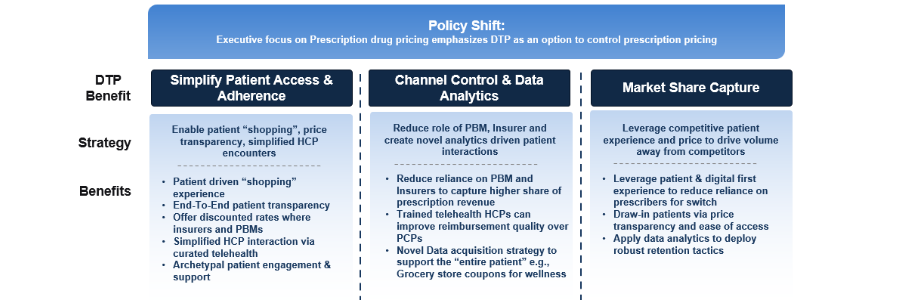
New regulations, including the Inflation Reduction Act (IRA) and the Most Favored Nation (MFN) policy initiatives, are prompting manufacturers to be more transparent about pricing and shift away from rebate-focused channels. These policies compress margins, change long-standing contracting practices, and encourage manufacturers to consider new models that give them more control.
Economic Inefficiencies in the Existing Supply Chain
The legacy distribution model is burdened by a growing “gross-to-net” gap, where intermediaries absorb a significant portion of the product’s value. PBMs and wholesalers exert increasing influence over access and pricing, often limiting manufacturers’ ability to deliver value directly to patients. In response, DTP models help recapture economic value, streamline fulfillment, and offer clearer, more competitive pricing options. DTE directly addresses the employer’s frustration with opaque PBM pricing, creating an access channel that is not intermediated, focused purely on value and transparency.
Evolving Patient Expectations
Today’s patients expect the same convenience, speed, and transparency from healthcare that they experience in retail and digital services. They want easy access points, digital tools, virtual care, and clear information about costs. Manufacturers are responding by building digital pathways that integrate education, telehealth, prescribing, and pharmacy fulfillment, all within a single patient ecosystem.
Advances in Telehealth and Digital Pharmacy
Technology now enables manufacturers to provide safe, compliant, and efficient access directly to patients. Virtual prescribing, remote diagnostics, digital engagement tools, automated refills, and integrated pharmacy networks remove barriers and shorten the time to therapy.
Together, these changes are reshaping how medicines reach patients. As pressure grows around transparency and affordability, DTP models are becoming a way for manufacturers to protect growth, improve engagement, and meet rising patient expectations.

Strategic Considerations for Direct Models
As these market changes affect traditional access channels, pharmaceutical manufacturers are seeking new ways to help patients find, initiate, and adhere to therapy. Companies seek models that make treatment more affordable, transparent, and user-friendly, enabling them to meet the rising expectations of patients and deliver better value across the commercial ecosystem.
Direct Model Objectives:
- Strategic Control: Enables manufacturers to own the patient journey end-to-end.
- Affordability and Access: Simplified enrollment, copay, and savings support, cash-pay options.
- Digital Engagement: Telehealth, tracking tools, adherence support, community connections.
- Pharmacy Ecosystem Integration: Streamlined fulfillment, auto-refills, and claims navigation.
The Evolving Direct Model
Herspiegel has developed a model to provide a clear and adaptable roadmap for pharmaceutical companies to enhance their market access strategies.
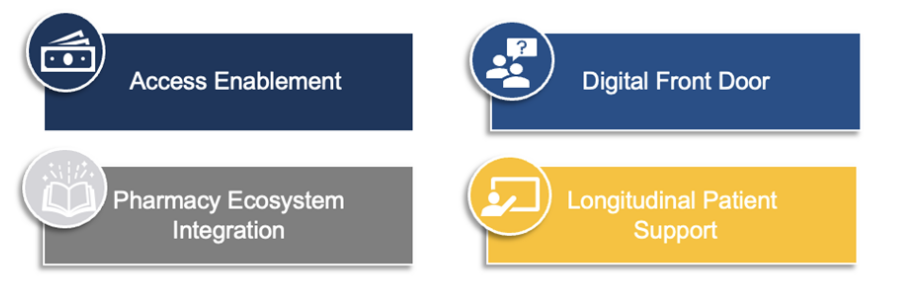
Designed to balance commercial agility with patient-centered outcomes, the Direct-to-Patient model brings together the following interconnected components:
- Access Enablement: Streamlined benefits verification, copay assistance, and insurance navigation accelerate therapy initiation.
- Digital Front Door: A unified patient entry point for education, telehealth, and prescription fulfillment ensures simplicity and continuity.
- Pharmacy Ecosystem Integration: Connected specialty, retail, and DTP pharmacy networks improve transparency and reliability of fulfillment.
- Longitudinal Patient Support: Continuous engagement through digital education, adherence tools, and community connections drives persistence and satisfaction.
By integrating these components, manufacturers create a closed-loop experience that links awareness, diagnosis, access, and adherence, resulting in stronger, longer-term relationships with patients and brands.
Direct-to-Employer programs build on these elements and include:
- Access Enablement: Employer portals link to digital navigation funnels, creating a pathway to DTP offerings.
- Digital Front Door: Employer-linked microsites and co-branded portals with condition-based campaigns connected to DTP.
- Pharmacy Ecosystem Integration: Leveraging connected specialty, retail, and direct pharmacies provides employer-defined pricing with predictable options.
- Longitudinal Patient Support: Continuous engagement through integrated patient support programs, navigation support, and co-branded engagement.
These elements extend Direct-to-Patient capabilities into employer-sponsored channels while maintaining pricing transparency and patient engagement.
DTP Readiness Assessment
To address whether a direct model supports a product’s access strategy, we created our DTP Readiness Assessment. This framework helps simplify decision-making by turning complex patient and market dynamics into a clear readiness signal. By evaluating your product across therapeutic areas, access, digital adoption, and patient behavior, the tool helps you understand where, how, and if DTP can create value.
Once completed, the tool creates a personalized readiness score that highlights opportunities, risks, and recommended next steps. From there, you can choose to schedule a conversation with our experts to review insights, analogs, and current market trends shaping direct-to-patient models.
Start the Assessment →
Take our DTP Readiness Assessment Today
Meet The Authors
Visit similar content:
FAQs on Direct-to-Patient vs Direct-to-Employer
What is the difference between Direct-to-Patient and Direct-to-Employer models?
Direct-to-Patient models are designed to support individual patients by improving affordability, transparency, and speed to therapy. Direct-to-Employer models focus on employer-sponsored populations, aligning access strategies with benefit design, population health goals, and cost predictability.When should a company consider Direct-to-Employer in addition to Direct-to-Patient?
Direct-to-Employer models are most relevant when employers are seeking greater control over costs and outcomes for defined populations, while Direct-to-Patient models are typically prioritized when improving the individual patient journey and access experience is the primary objective.
Additional FAQs
- What benefits does a DTP model offer manufacturers?
DTP helps companies gain real-time patient insights, enhance adherence, and foster brand loyalty. It can also speed up time-to-therapy, support better forecasting, and reveal what patients need to stay on treatment. What types of therapies fit best with a DTP approach?
DTP is well-suited for therapies that require education, support, and assistance with affordability. This includes areas such as weight management, metabolic diseases, and mental health, as well as certain specialty conditions.How can manufacturers begin to identify direct model opportunities?
The best starting point is a readiness assessment. Herspiegel’s DTP Readiness Assessment helps companies understand their current capabilities, identify opportunities, and build a clear plan for DTP adoption.- Why does DTP matter now?
Policy pressure from Most Favored Nations and the Inflation Reduction Act is reshaping pricing and value expectations, while patients increasingly expect digital-first and affordable access. DTP also enables direct, data-rich patient engagement, creating an opportunity for manufacturers to drive meaningful impact when implemented strategically.
Sources:
Pipes, S. C. (2025, August 8). Drugmakers are embracing direct-to-consumer sales. That’s fantastic news for patients. Forbes. https://www.forbes.com/sites/sallypipes/2025/08/08/drugmakers-are-embracing-direct-to-consumer-sales-thats-fantastic-news-for-patients/