

Last Updated: February 24th, 2026
Market Entry and Long-Term Growth
Introduction
Our client sought to understand both pediatric and adult patient populations for a rare disease, focusing on the number of actively treated patients by demographic, treatment paradigm, insurance coverage, and competitive dynamics to optimize patient targeting for market entry and growth.
The Challenge
The client needed to identify key treatment gaps and understand the distinct market conditions for each patient group to ensure a strategic and successful launch while positioning the treatment for long-term growth.
Our Solution
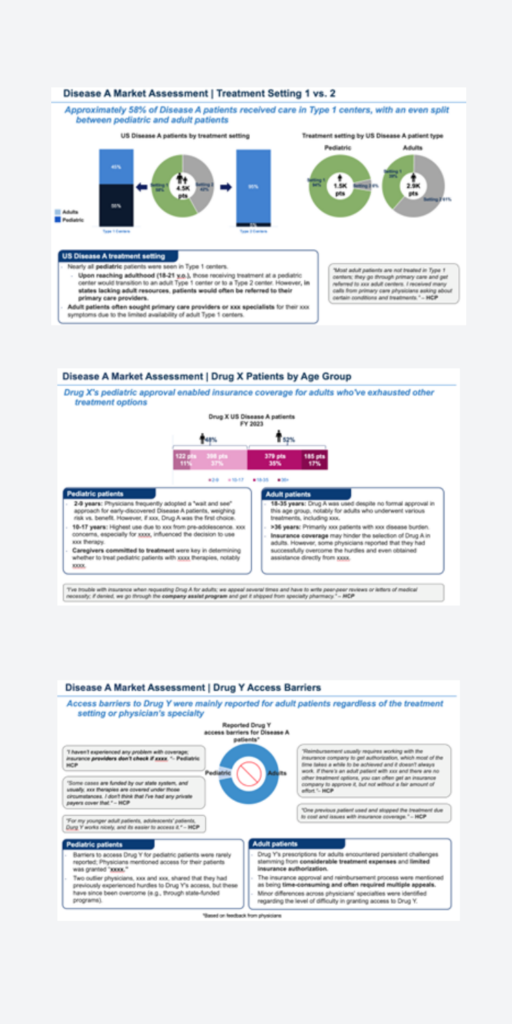
- Conducted a detailed demographic analysis of pediatric and adult patient populations, assessing disease prevalence, actual prevalence, number of actively treated patients, and treatment accessibility.
- Identified critical treatment gaps, providing insights into how a new treatment could address unmet needs in both age groups.
- Analyzed the competitive landscape, focusing on product offerings, market share, and strategic moves of competitors, with a specific focus on differences between pediatric and adult patient segments.
- Evaluated factors specific to the rare disease, including regulatory incentives and the impact of patient advocacy.
- Developed a strategic market entry plan based on these insights, optimizing positioning for long-term growth.
Value Delivered
- Provided essential insights to determine the initial target population, incorporating a comprehensive market analysis and competitive positioning, as well as a realistic forecast of patients eligible to switch therapies.
- Developed a phased market entry plan, ensuring adaptability to evolving market and competitive conditions while preparing for future expansion.
Create a targeted analysis to optimize market entry and long-term positioning


FAQs on Target Patient Population Analysis
-
Why is target patient population analysis critical in rare disease development and launch planning?
Understanding the size, characteristics, and treatment dynamics of distinct patient populations enables more informed development decisions, sharper positioning, and a launch strategy aligned to both near-term opportunity and long-term growth. -
How do pediatric and adult rare disease markets differ from a strategic perspective?
Pediatric and adult markets often differ in prevalence, treatment access, regulatory pathways, and competitive intensity. Evaluating these differences helps prioritize the right initial patient population while planning for future expansion. -
How does competitive and demographic analysis support long-term market growth?
Integrating demographic insights with competitive intelligence allows companies to identify unmet needs, anticipate market shifts, and design phased entry strategies that remain adaptable as the market evolves.